Continuously Becoming Home
What it means to live together with new and artificial natures in a moment defined by the intersection of environmental crisis and the emergence of artificial general intelligence is yet unknown. Continuously-Becoming Home asks big questions about small domestic relationships and the design of architecture in a time of significant environmental and technological change. The title refers to the emerging reality that the nature of our mundane domestic activities and the simple solidity of the shelter that holds them is destabilized by continuous streams of invisible information that flow through our increasingly efficient responsive environments and quantified lives.
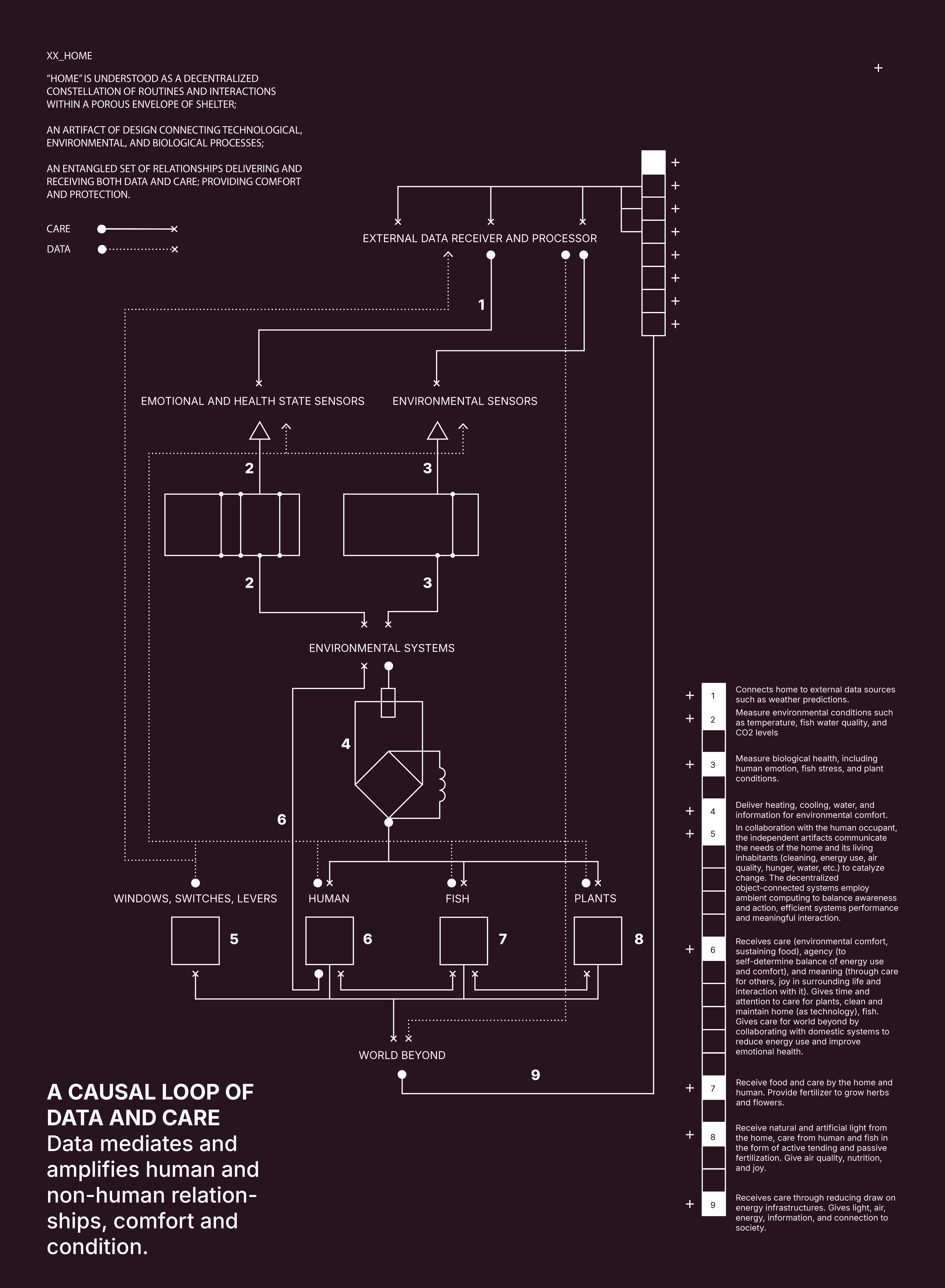
The installation imagines the emerging 21st-century domestic landscape through the lens of eight small vignettes that explore the disposition of the home as a living and systems-linked architecture defined by a choreography of friction and cooperation. It explores the strange, uncanny, and delightful rituals that emerge from the relationships between humans and non-humans living together in acts of reciprocity, energy conservation, vulnerability, and stewardship.
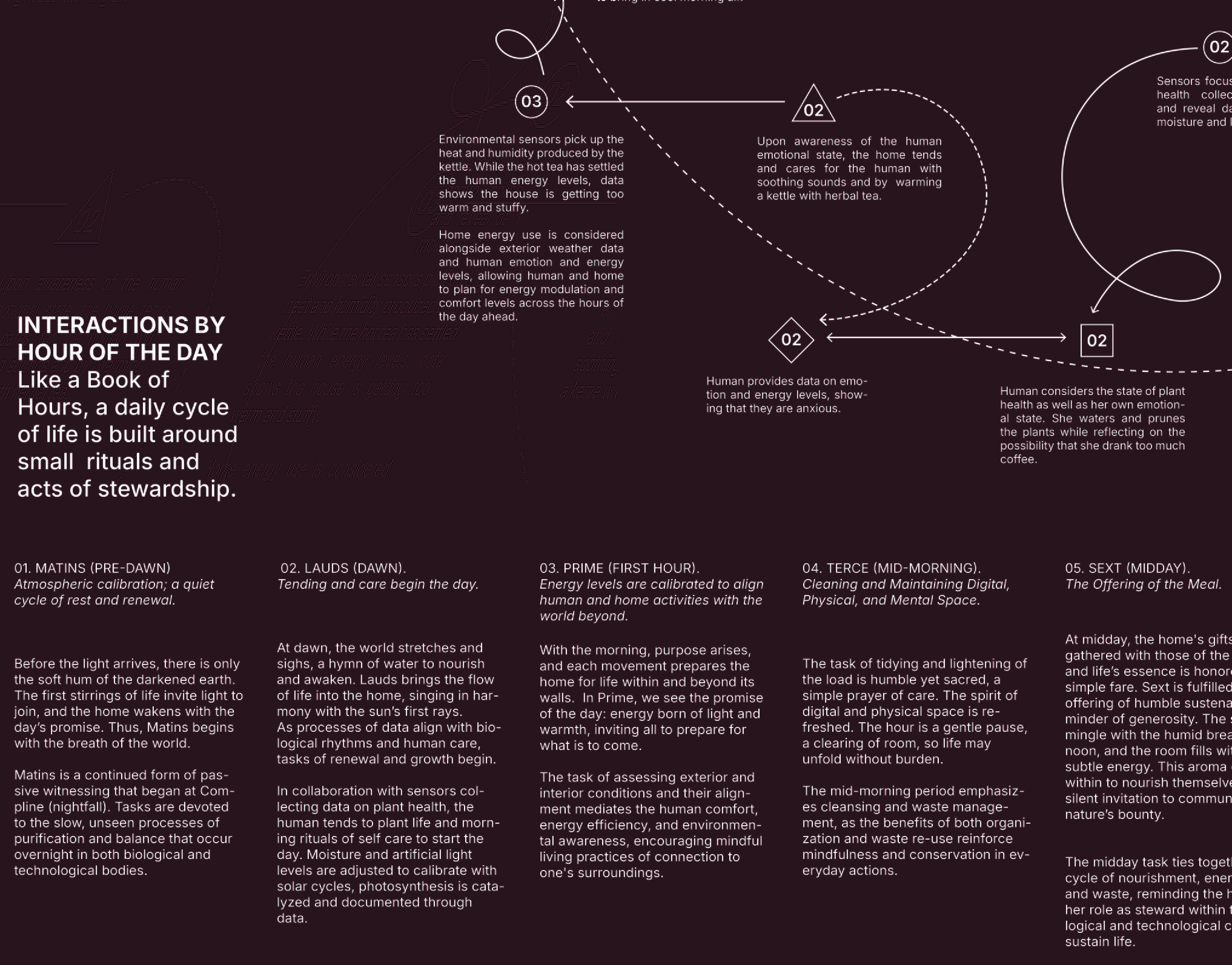
Inspired by rituals and prayer calibrated to the hours of the day in the Christian tradition of a Book of Hours, the interactions unroll over the course of an average day to explore the multiple and layered relationships between human and home as a physical, technological, and biological construct, and between our interior lives and the digitally-connected world beyond.
In contrast to the invisible efficiencies and technocratic slickness of the “smart home” paradigm, the installation explores the messiness and positive environmental impact of entangled systems of human life, data, and the biological world. It poses essential questions for design at the intersection of architecture, bio-design, and ambient computing as we collectively cascade toward an era of human-AI interaction and intensifying climate crisis:
What is the nature of the relationships of care and maintenance between humans, data, and our designed environments as we imagine a sustainable life together? How do these relationships change what it means to design our built world? What is the role of architecture in simultaneously confronting decarbonization and re-imagining what it means to be human in the 21st-century?
The small installation highlights aspects of a larger body of ongoing research that explores the ways in which design practice might actively re-shape embedded technological and formal value systems to develop the tools and technologies that lie at the root of our environmental crisis as the means by which to confront it.
In an era of continuously connected, responsive, and data-producing architecture, how is the disposition of architecture changing? To what extent has the DNA of design fundamentally shifted into a paradigm of human-computer interaction? How must our increasingly fused relationship with non-human biological and technological systems change our understanding of design and environmental impact? What are the implications for the disposition and definition of architecture in terms of emerging forms of collaboration, designing for continuous change, formal DNA, and disciplinary knowledge?
The installation directly builds upon the scientific work of the Harvard Center for Green Buildings and Cities House Zero, a living laboratory that researches the use of data, machine intelligence, and automation to decarbonize the built environment. Designed to push the boundaries of energy efficiency and sustainability in architecture, the House Zero project poses challenges for the nature of architecture as both an act and an artifact. The installation also features archival projects that track the history of friction between design for human meaning, engineered technologies, and the physical and biological systems that inhabit it: the tension be-tween energy efficiency and the human need for meaningful inefficiencies.
We are grateful to the Harvard Center for Green Buildings and Cities and the Harvard Graduate School of Design for support, and to Professor Ali Malkawi and the House Zero research team for their contributions and collaboration.
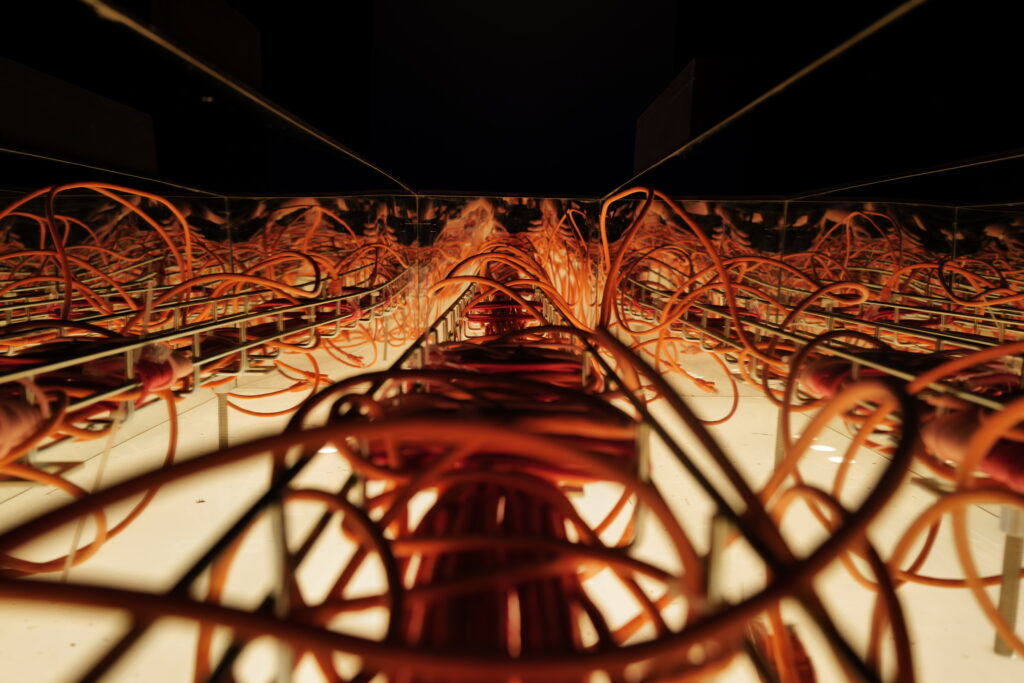
Principal Investigator
- Elizabeth Bowie Christoforetti
ViBE Lab Researchers
- Connor Gravelle
- Inmo Kang
- Pablo Castillo Luna
- Liz Wu
Output
Christoforetti, Elizabeth. “Continuously Becoming Home.” Installation in Time Space Existence. European Cultural Center Exhibition, May-Nov 2025. Venice, Italy.
Presented at the Biennale Architettura 2025: GENS Public Programme. Corderie dell’Arsenale, Fall 2025. Venice, IT.
Christoforetti, Elizabeth. “Resistant Data: Questioning Architectural Values in the Age of AI.” Harvard Design Magazine Digital, Nov 13, 2025.
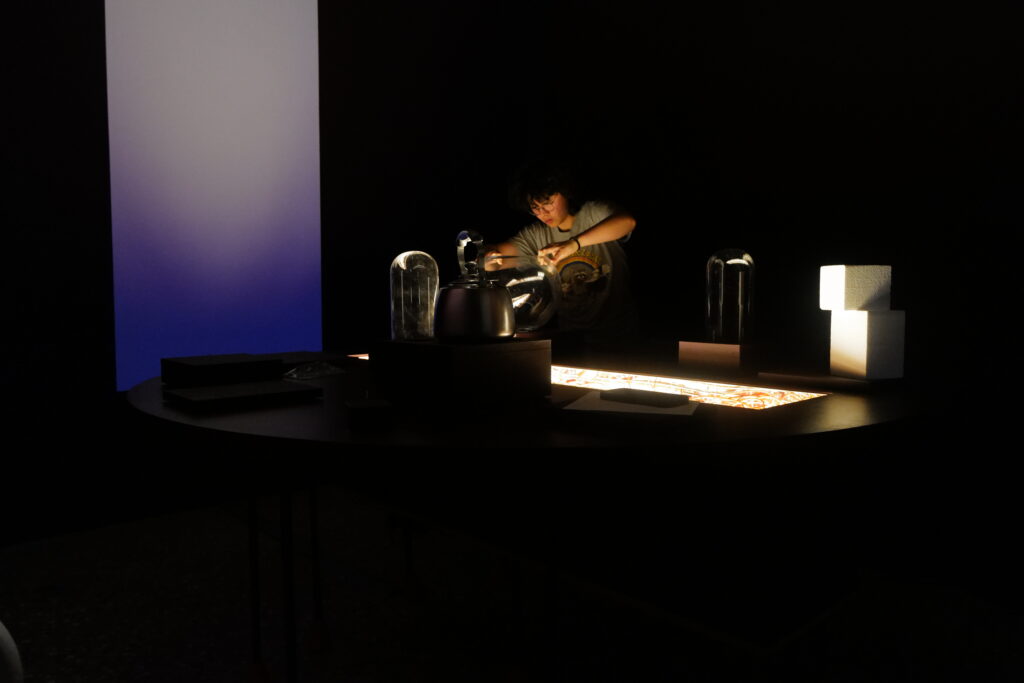
Photo Credits: Liz Wu and Celestia Studio
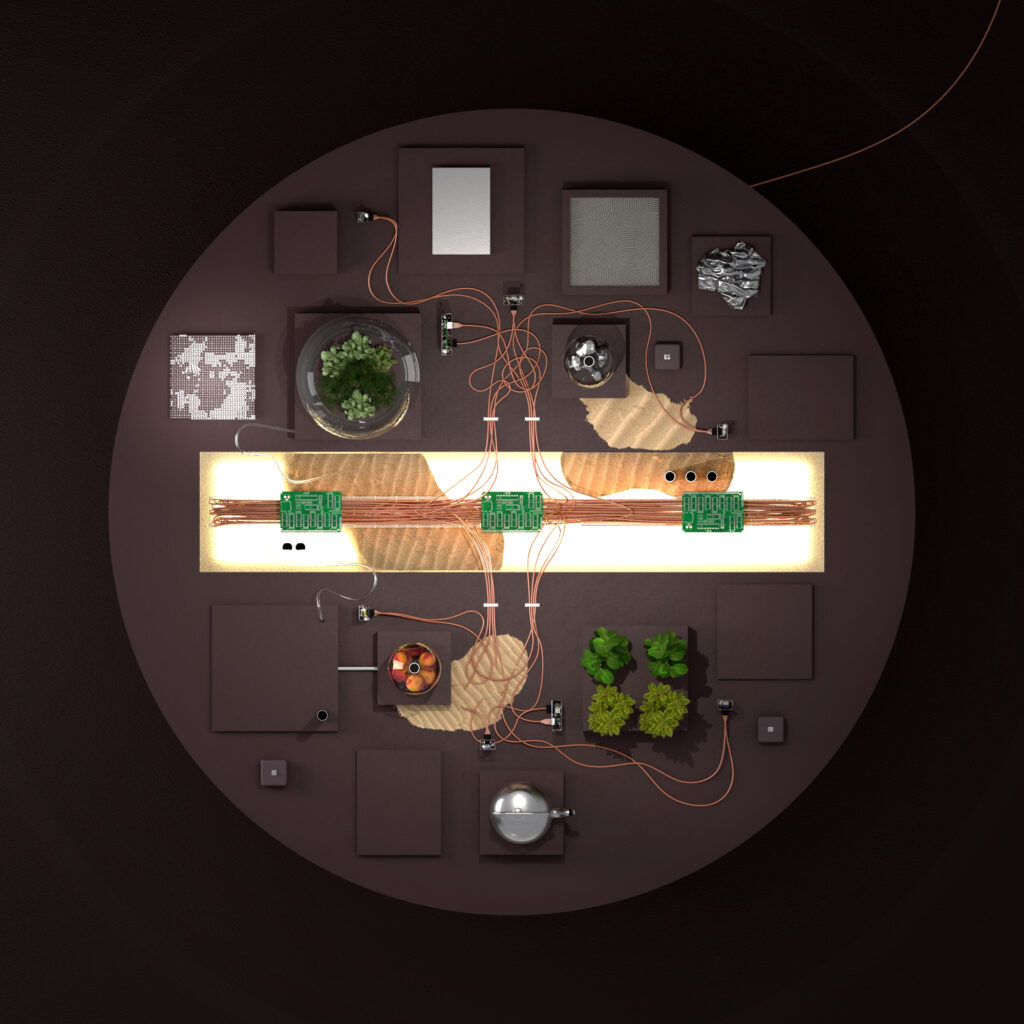
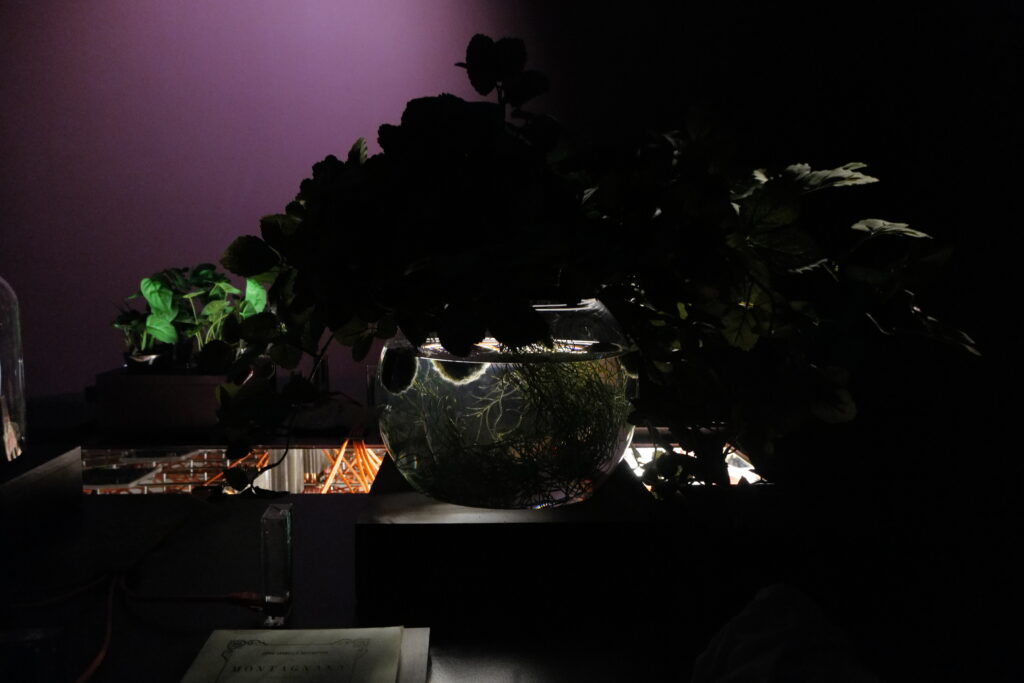
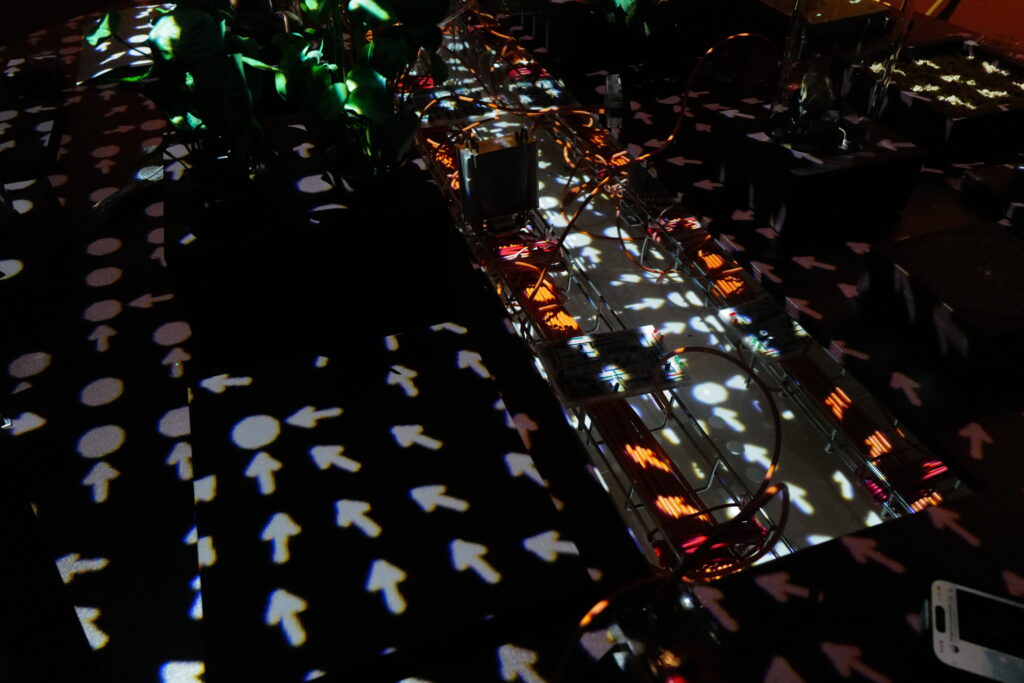

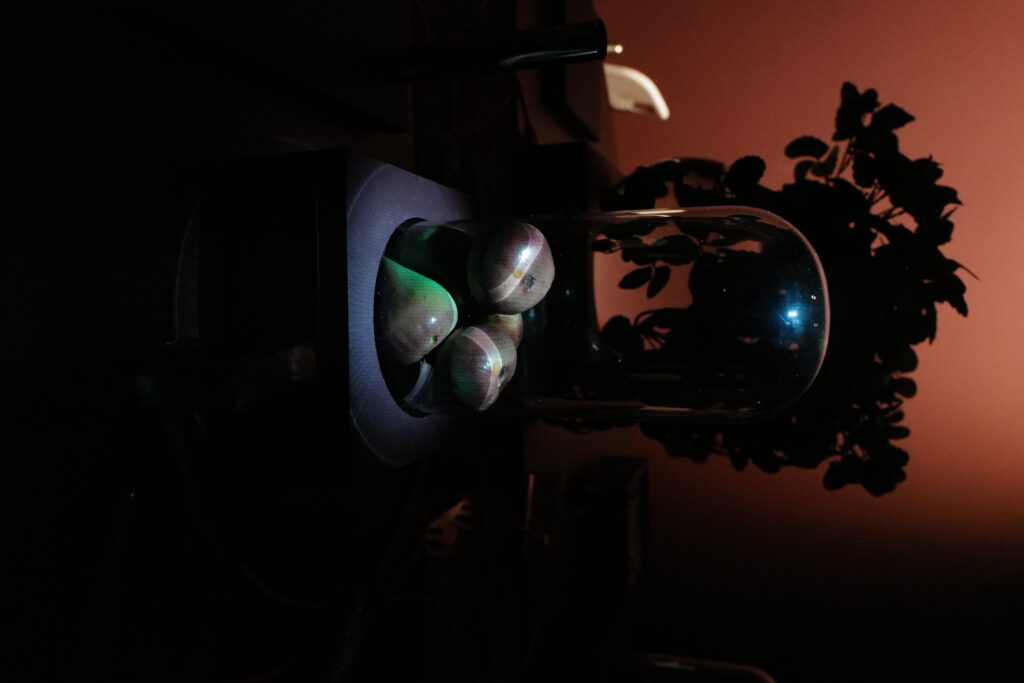

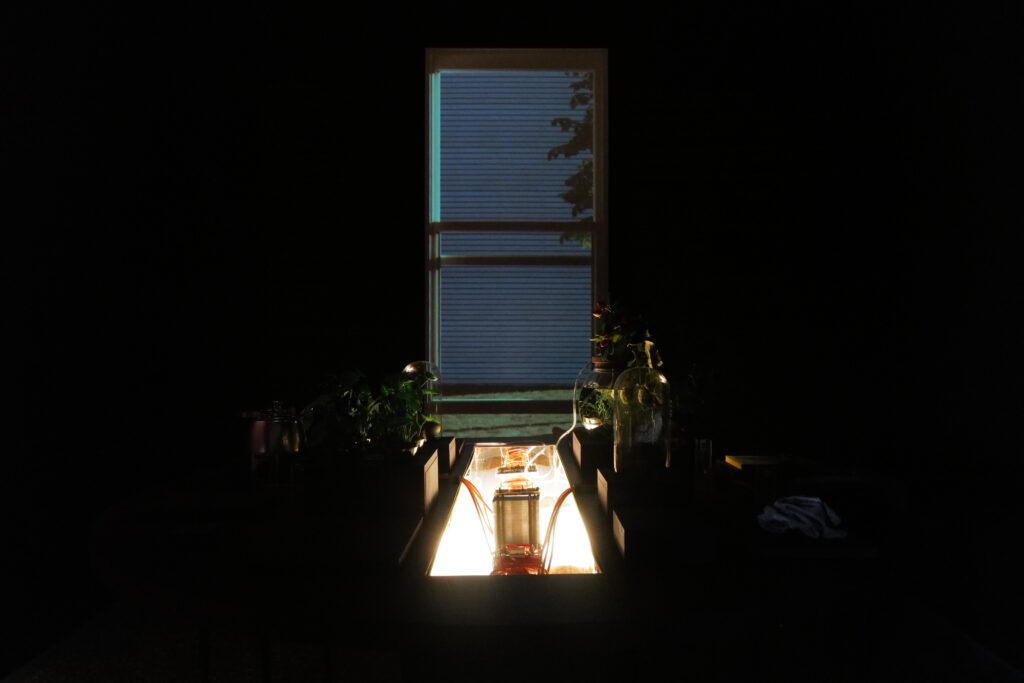
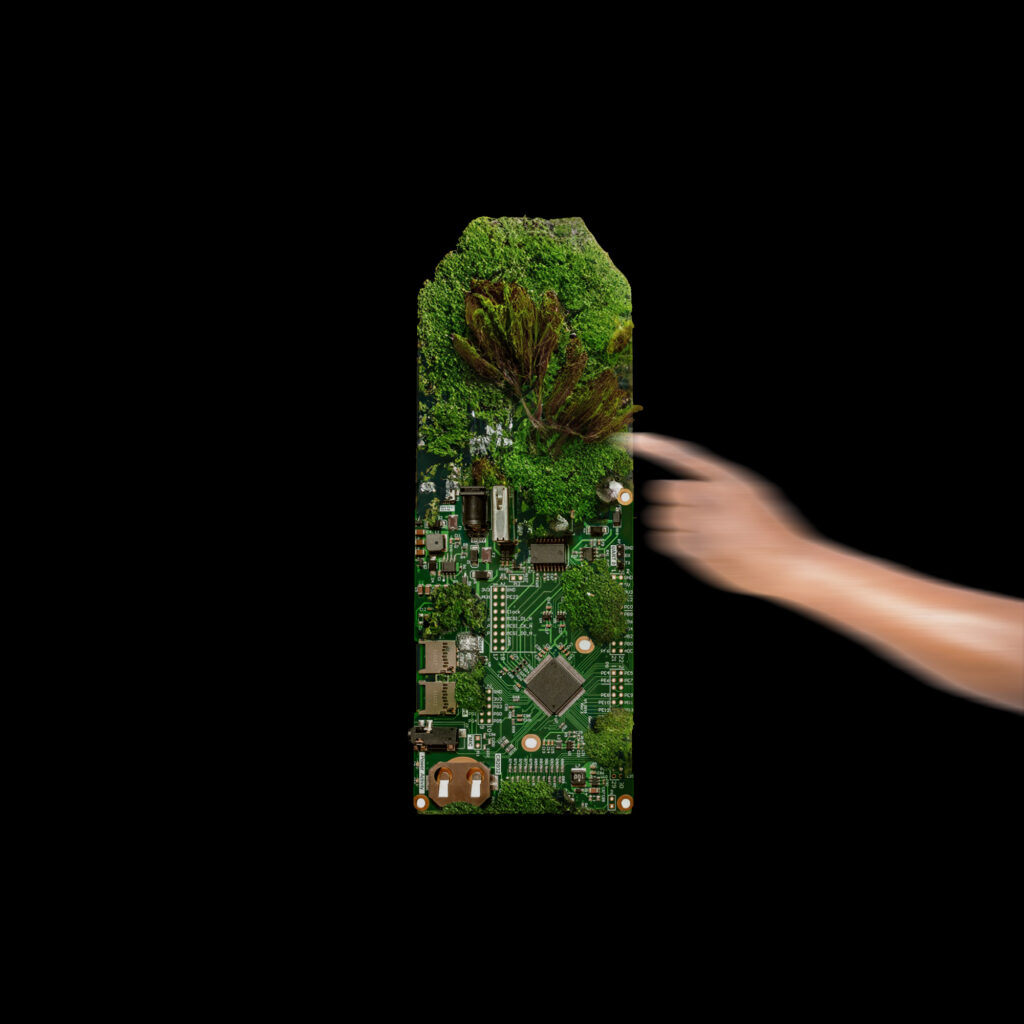
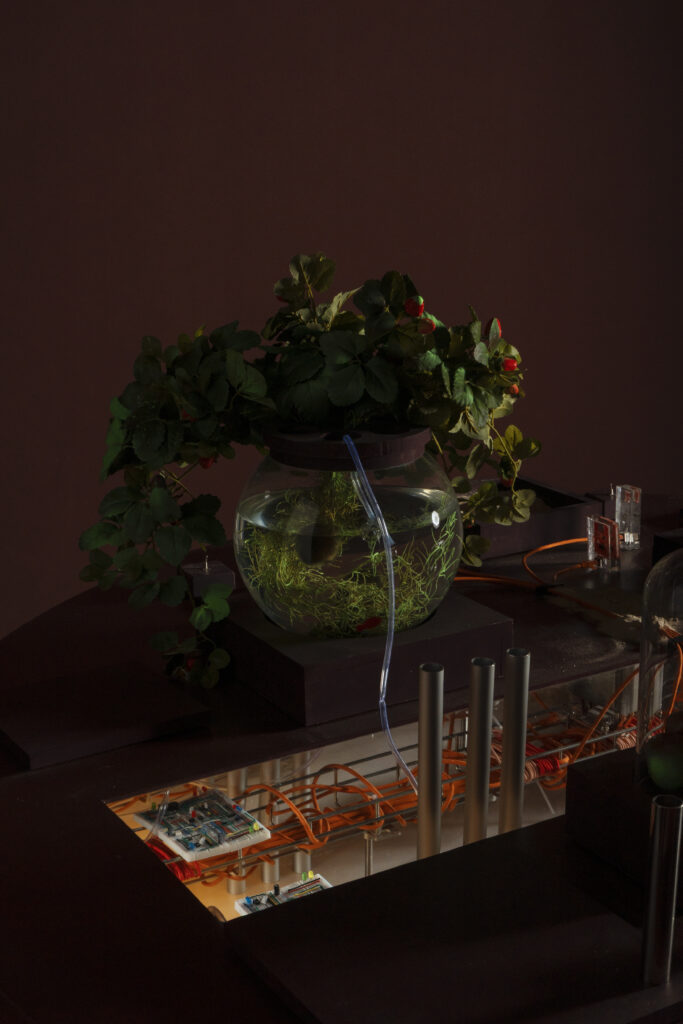
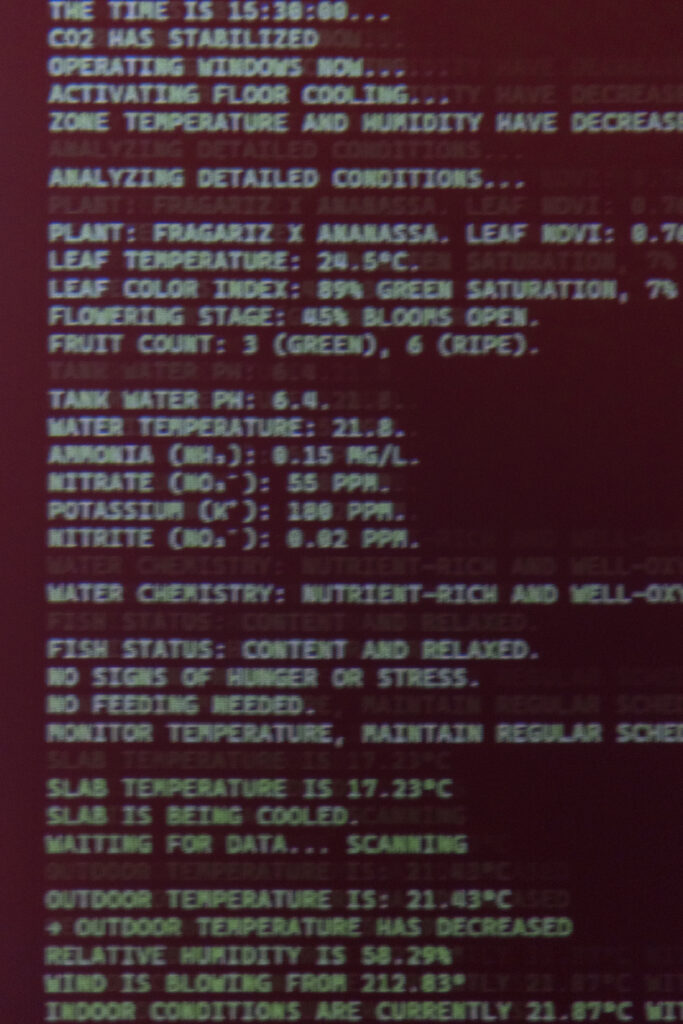
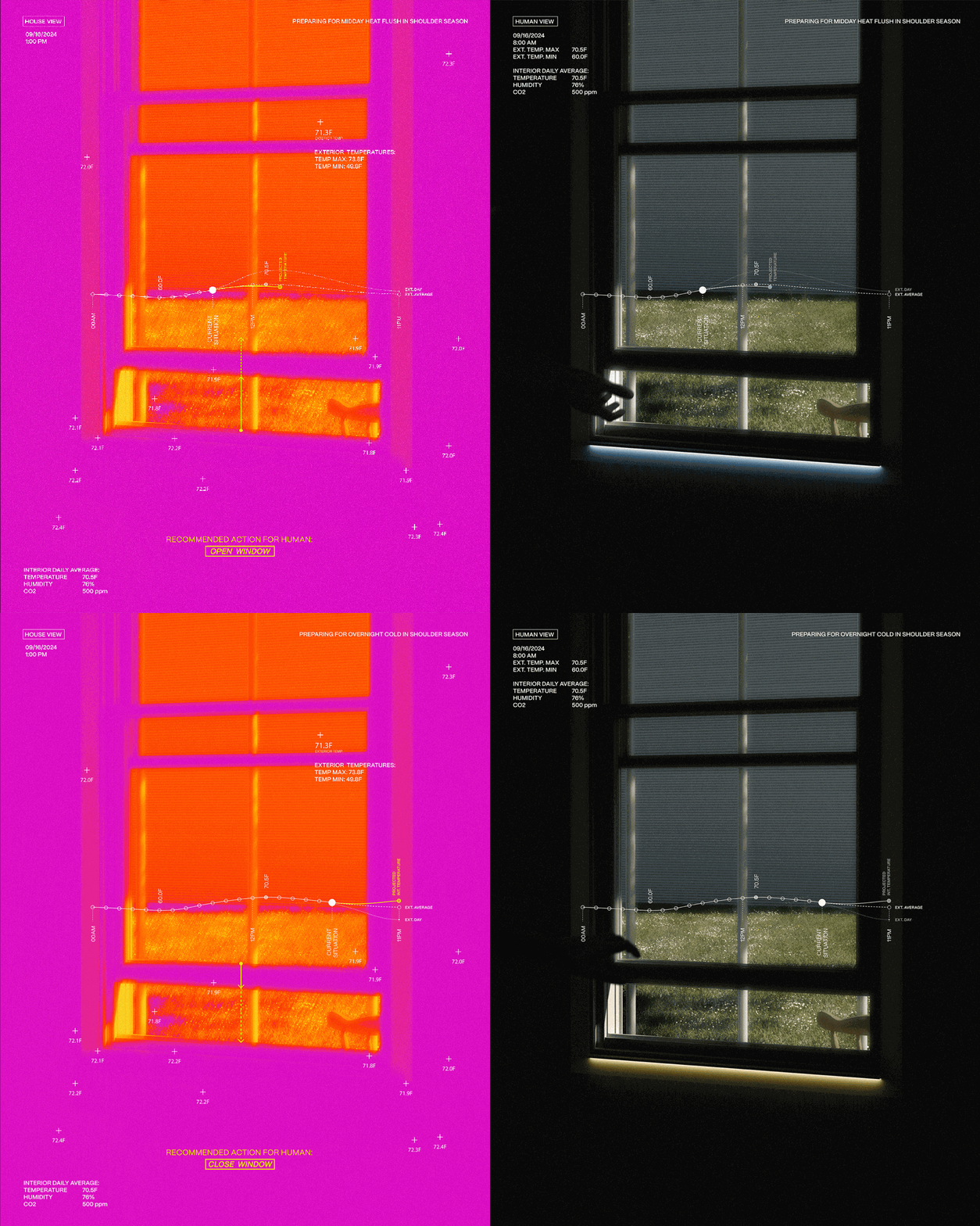
The installation relies heavily upon projection to convey change over time and the nature of interior relationships as the space cycles through the interactions across the hours of a day. A projected window uses a subtle layer of ambient computing to communicate its needs to the human inhabitant, creating a reciprocal relationship of agency in environmental determination between the human and the home. Parallel projected scripts of the human (left) and machine (right) perspective on temperature, energy use, and the biological and emotional status of the actors within the home run continuously over the diurnal cycle like a hybrid stream of consciousness.
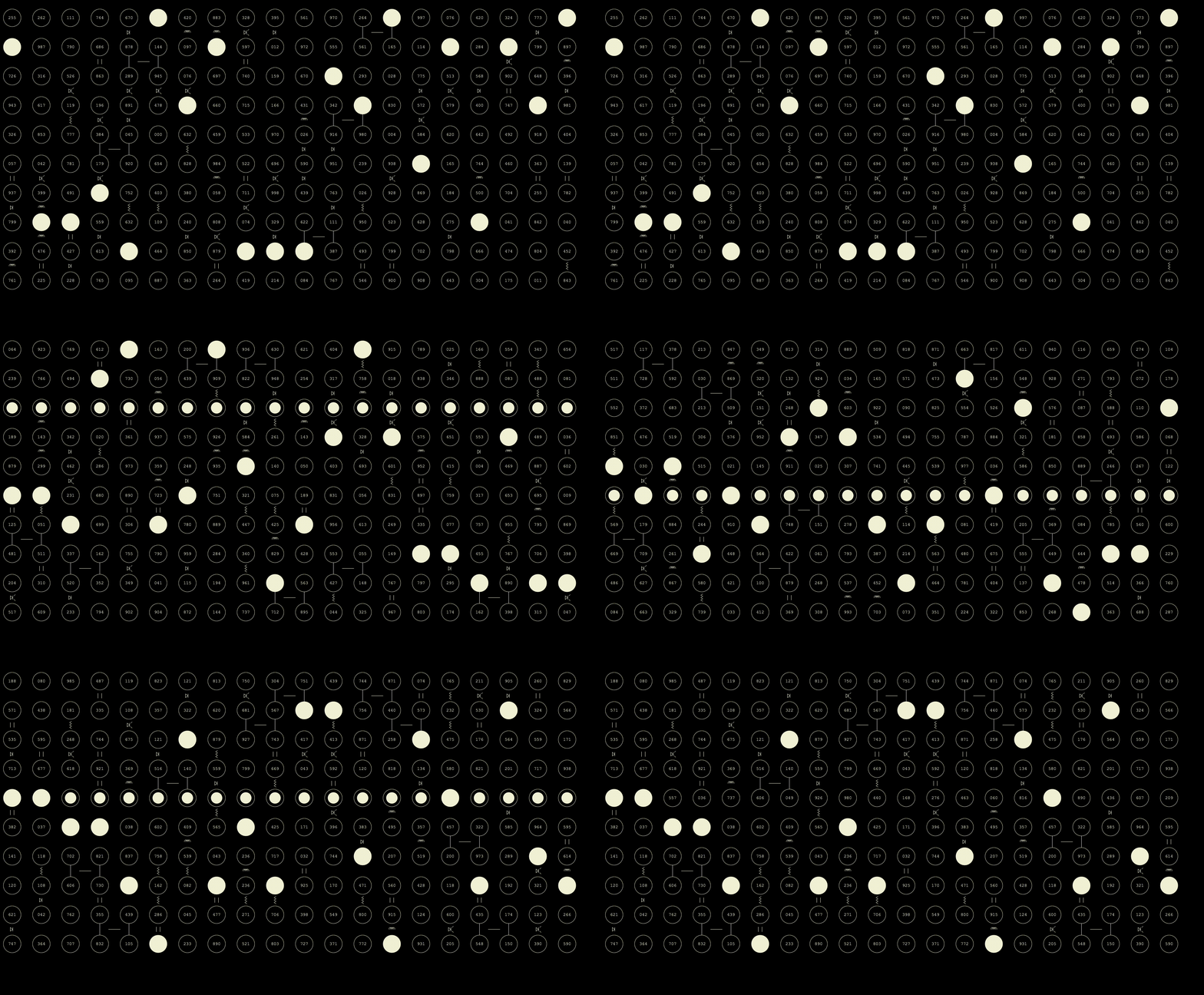
The full script of ambient interaction across the daily cycle shows the parallel perspective of the human-view (left) and data-view (right) as they navigate comfort and care. Interactions by hour of the day (left) take inspiration from early Christian and Jewish prayer traditions that evolved into the Liturgy of the Hours. The installation is mapped out as a set of interactions across eight acts that represent eight phases or “hours” in a daily cycle of domestic life. Like a the convergence of a Book of Hours and a Rube Goldberg device, the complex mechanics of the continuously-
becoming home perform deeply mundane and simple tasks, highlighting both the interconnectivity, complexity, and absurdity of a built environment that is driven by the sometimes-conflicting values of performance optimization and human meaning. The daily routines of mindful contemplation and stewardship of one’s surroundings provide structure for the sometimes humorous and delightful relationships between the technological and biological species within the home.
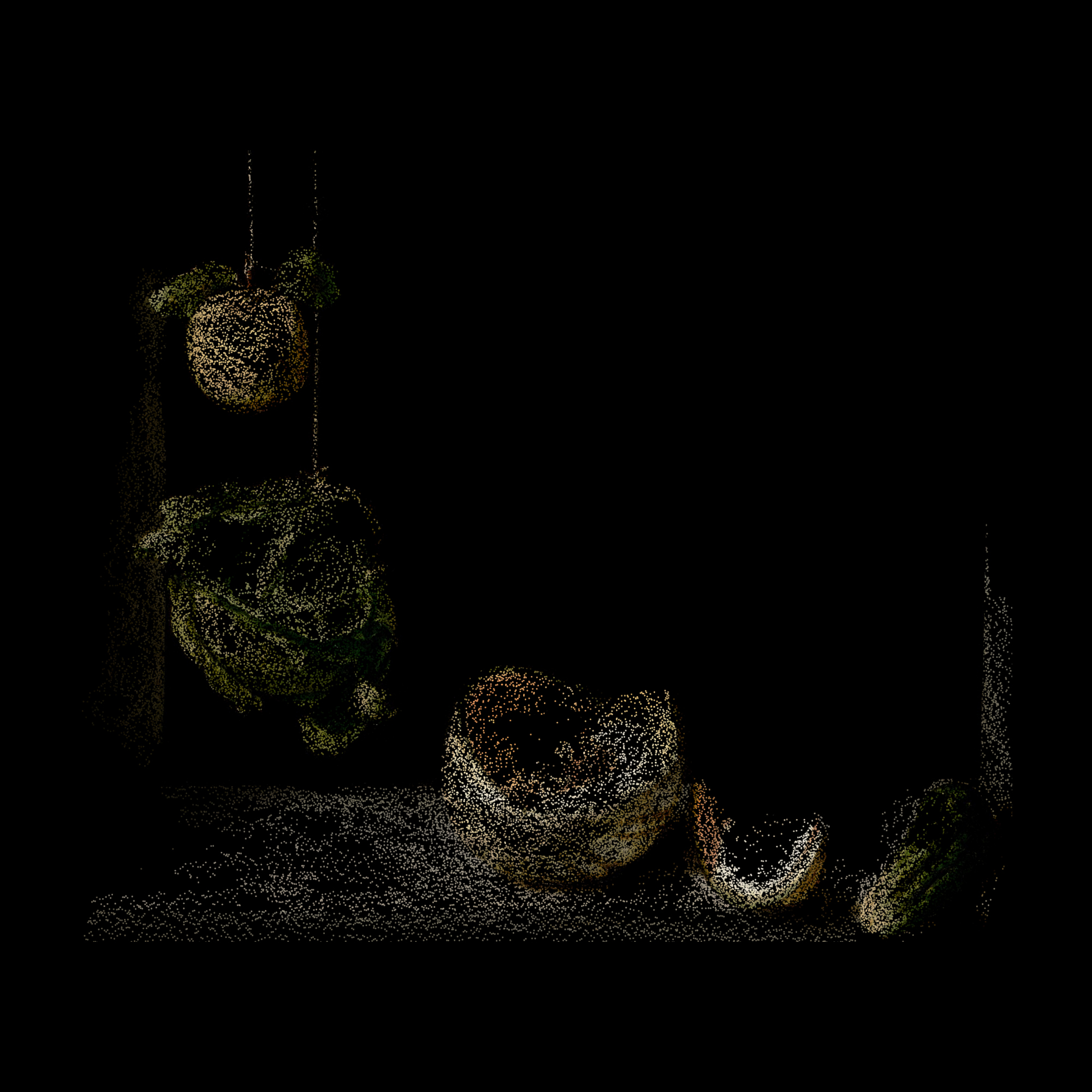
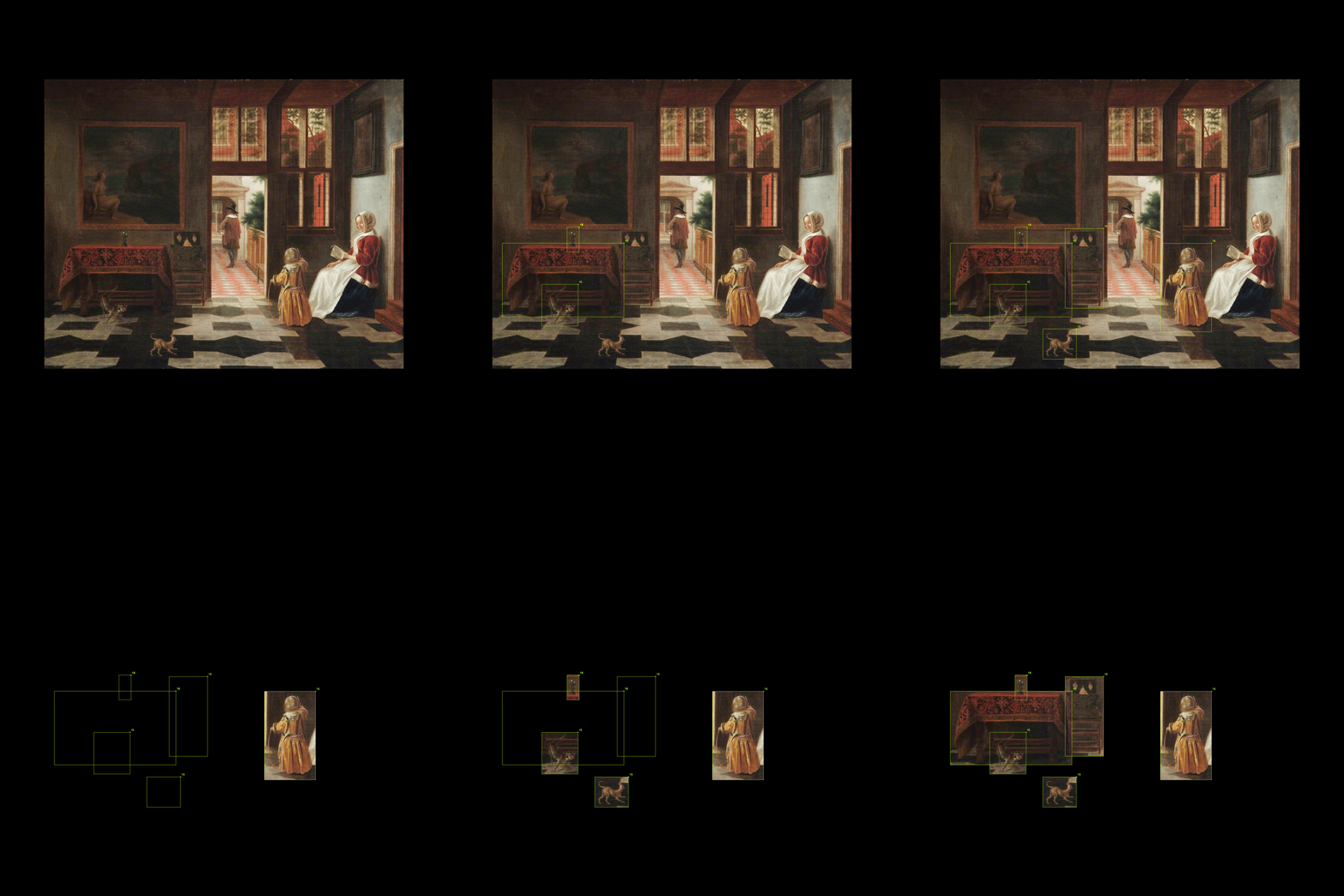
Early design research utilized art history, specifically still life paintings and works depicting domestic interiors, to imagine and explore the addition of a technological layer to our domestic lives, to consider the ways in which human meaning in the domestic environment might negotiate time, data, environments of care, and spatial interaction. The exhibition experience draws inspiration from immersive theatre such as the Sleep No More production.

Above: Diagrams articulate the temporal and data-driven relationships within the domestic vignette across hours of the day as it unfolds within the installation. The cycle of interactions within the installation highlight the relationship between digital, human, and biological domestic actors.
Below: Data mediating the states of the human and non-human inhabitants is conveyed to the human through a range of ambient and visualized methods to mediate care between human, biological, and technological residents.