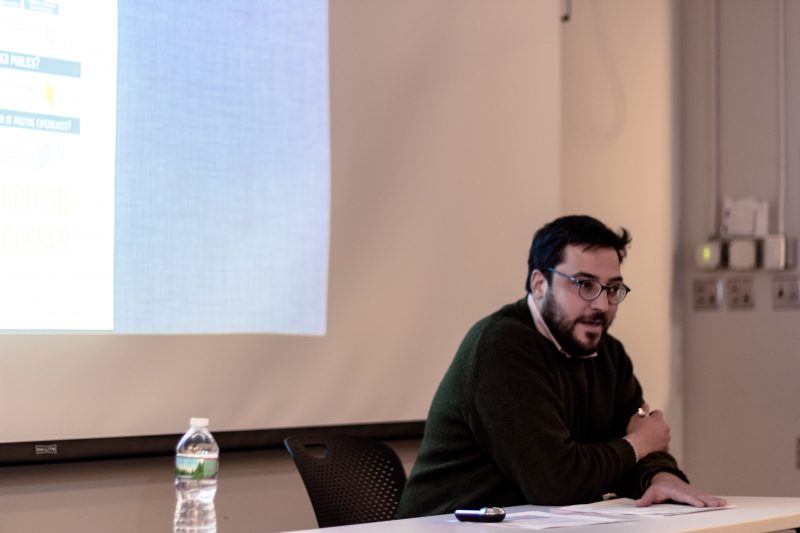
Final Presentation of a Three-Year Research Project Funded by INFONAVIT Date: Thursday, December 15th from 10:00 AM—12:00 PM Place: Room 112 in Gund Hall, Harvard Graduate School of Design Diane Davis (Principal Investigator of Rethinking Social Housing in Mexico—RESHIM) will present the results of the Governance Report and Best Practices focusing primarily on the Urban Value Creation Platform for sustainable urban development and social housing renovation in Mexican cities. Carlos Zedillo (Head of the Research Center for Sustainable Development of the Mexican National Workers’ Housing Fund Institute—INFONAVIT) will join GSD faculty and students in a discussion of strategies for better […]
Blog
The goal of the Latin GSD student organization is to spread the discussion of topics that are currently relevant to design, landscape, urban design and planning disciplines in Latin American Countries. And of course, to promote the integration between people interested in Latin America. Building on this premise, this event is the second of a series of lectures where we want to discuss and ask the curators of the Latin-American pavilions what are the lessons learned after this unique event and how this pavilions respond to Alejandro Aravena’s call for innovation in times of scarcity. With this in mind, we […]
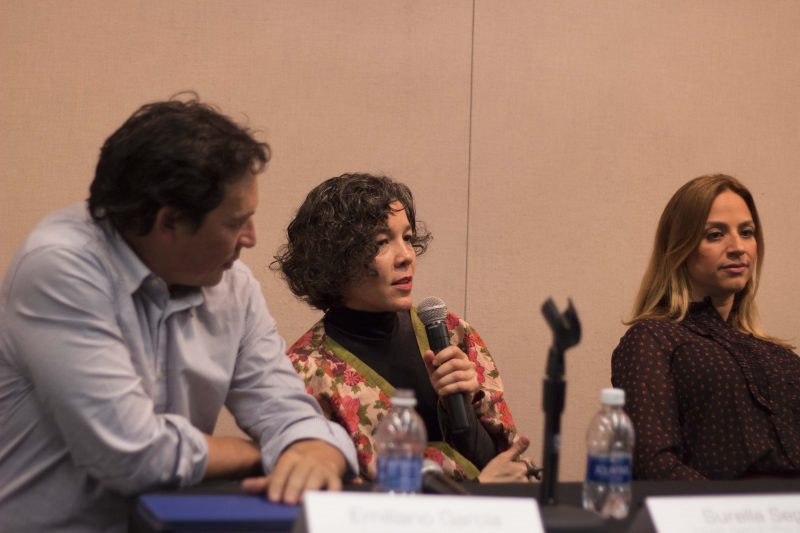
Paulina Campos (CEO, Fundación Hogares), Surella Segú (Former Head of Office for Urban Development at the Mexican National Workers’ Housing Fund Institute—Infonavit), and Emiliano García (Principal Designer, Taller de Operaciones Ambientales) joined Diane Davis (Charles Dyer Norton Professor of Regional Planning and Urbanism & Chair of the Department of Urban Planning and Design), and David Parente (Concurrent Master in Urban Planning + Landscape Architecture Candidate) in a discussion of planning and design strategies deployed to address the growing problems of housing abandonment in Mexico. The panel took place on November 9th at the Harvard Graduate School of Design as a joint […]
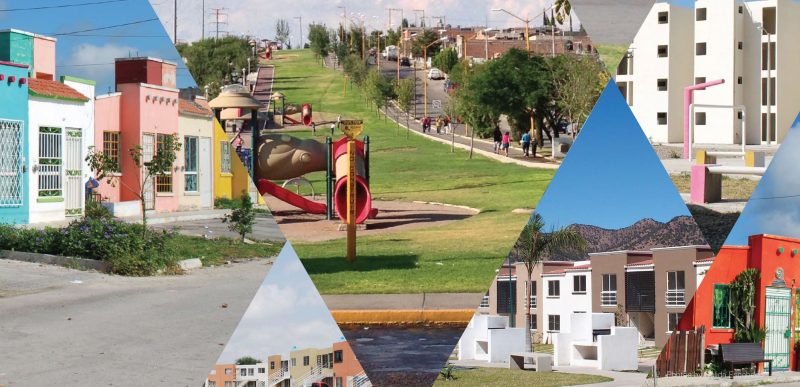
Date: Wednesday, November 9, 2016 – 6:30pm Location: Graduate School of Design, Gund Hall, Room 112 Officials from Fundación Hogares and the Mexican National Workers’ Housing Fund Institute (Infonavit) will join UPD faculty and students in a discussion of planning and design strategies deployed to address the growing problems of housing abandonment in Mexico. Focusing on a social housing development in Oaxaca, the panel will address the conditions that made it possible for national government officials, urban designers, community development professionals, and housing policy advocates to push forward an experiment in policy innovation via on-the-ground implementation. Panel: Paulina Campos, CEO, Fundación Hogares […]
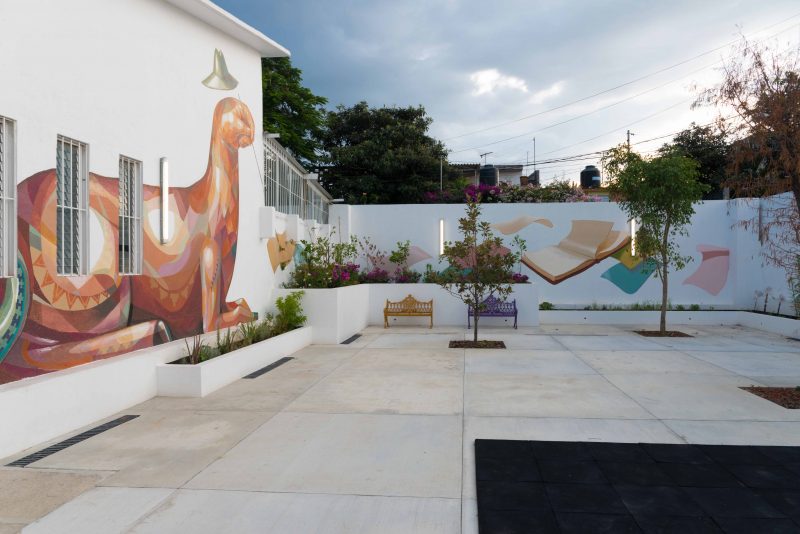
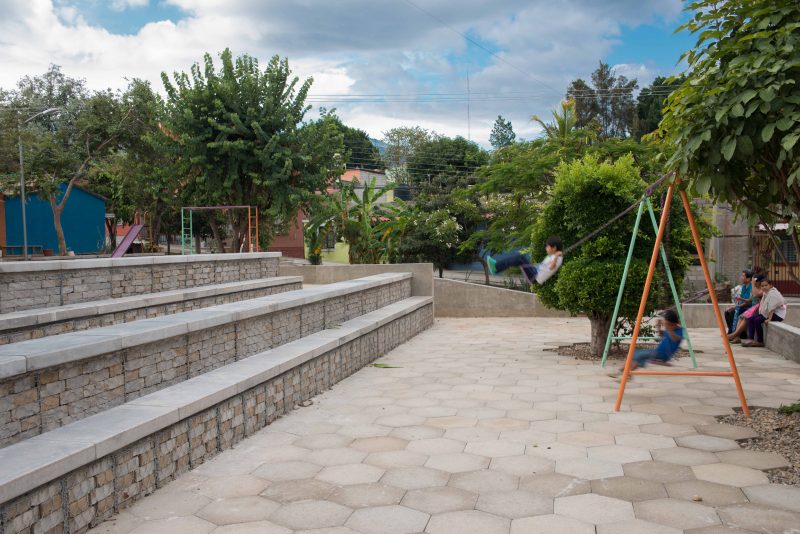
Primero de Mayo project unfolds with three major dimensions: as an intra-institute policy innovation, as a physical design intervention, and as community development program. A discussion panel with the participation of Infonavit and Fundación Hogares officials will take place on November 9th, 6:30 p.m. at the Harvard Graduate School of Design, Room 112. The event is a joint effort between Mexican Cities Initiative, the Department of Urban Planning and Design, and the Joint Center for Housing Studies. Among the responses within the Mexican National Workers’ Housing Fund Institute, or Infonavit has been a move towards broadening the scope of policy from the individual home […]
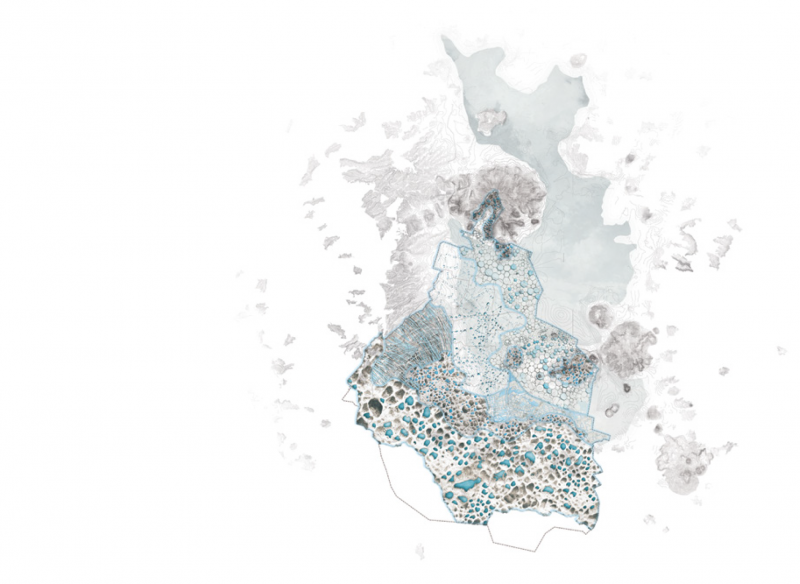
An unprecedented effort to understand Mexico City’s current hydric metabolism, its related urban vulnerabilities and the possibilities of tackling these through a system of public spaces. As an emerging platform for innovative ideas and actionable knowledge, Mexican Cities Initiative is proud to present Towards a Water Sensitive Mexico City: Public space as a rain management strategy. This project emerged from the prior work of a GSD alum, Victor Rico Espínola whose involvement in this endeavor crystallized, first in the development of the feasibility assessment, and later into the construction of La Viga Linear Park in Mexico City. Towards a Water Sensitive Mexico City: […]
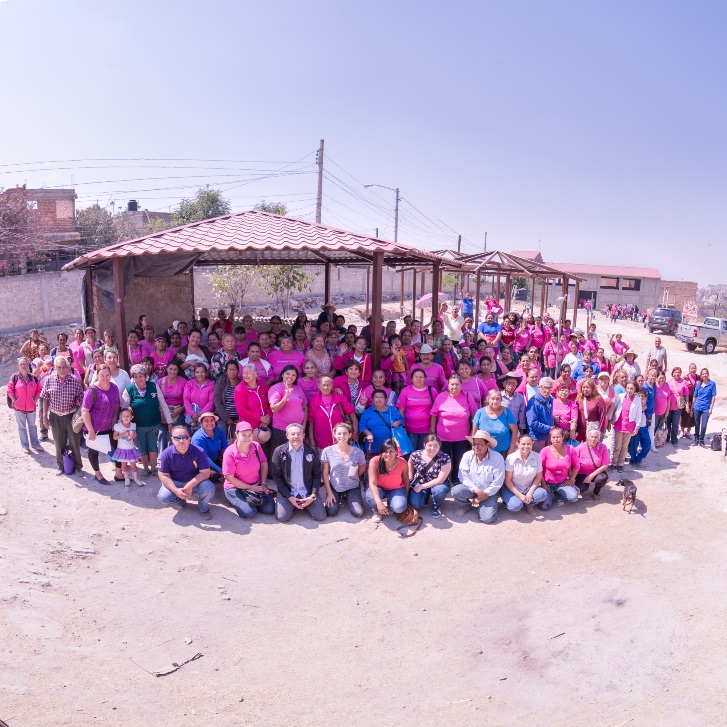
By Raúl Díaz The UNESCO-ITESO Chair (UICH) was founded in 1998 at the Universidad ITESO, in Guadalajara, Mexico. One of its main objectives is to put in practice alternative forms of urban development as opposed to functionalist and pragmatic schemes. For over 18th years, UICH has worked with dozens of communities living on poverty and marginality to overcome their living conditions and to empower their own initiatives. One of the recent experiences is the construction of a community center that shelters 220 head of household that gather every Thursday to receive and share a human formation from the hand of the […]
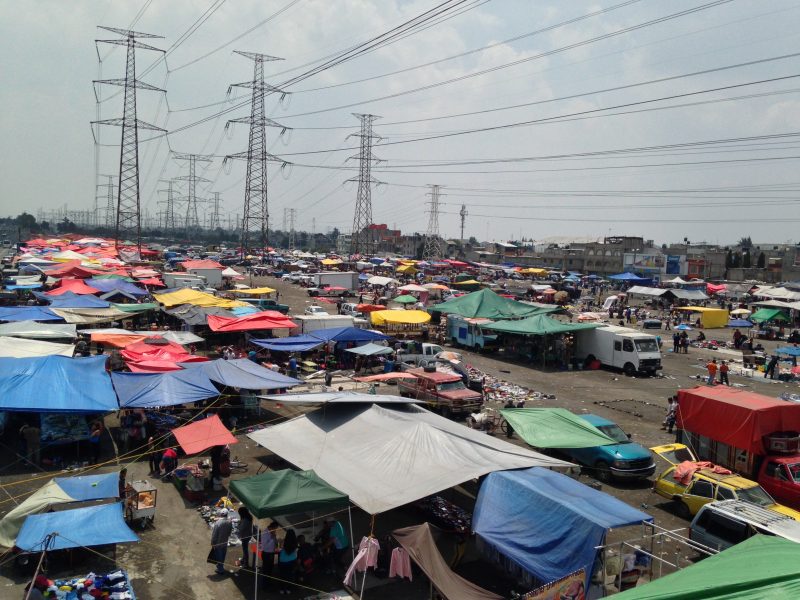
We are proud to present this guest post by urban planner and researcher Guillermo Bernal, founder of the Mexico City consulting firm Lugares Publicos and a member of Taller Participativo Barrial. The Mexican tradition of the “tianguis,” or open-air market, dates to pre-Columbian times. Every important city had a tianguis where, on certain days of the week, the public plaza was occupied by stalls offering a wide variety of food and other products, as well as services. People came from surrounding towns, and sometimes from very far away, to buy and sell. The tradition of open-air commerce in public spaces […]
MAUD ’14. Víctor Manuel Rico Espínola, MAUD ’14. Mexico City is often portrayed as a kind of self-organizing chaos. Nonetheless, it follows a logic of its own. After the Spanish conquest of the Aztec empire in 1521, insistence to consolidate the new capital in the middle of a marshy island, and a continuous battle against floods, led decision makers of the time to drain an entire lake to the ocean. In that sense, Mexico City confronted its own geography in a way very few cities have. Not only has the city’s form been the result of political intention, it has […]
Please join us for: Presentation of 2015 Grantee Research & Reception March 3rd, 2016 Gund Hall-Loeb Library Lobby 6:30 pm Reception to Follow Presentations Presenting: En Bici–Michael Meo & Carlos Hernandez Tellez Invisible Infrastructure — Jessica Bello & William Rosenthal Nested Informalities–Yi Li & Dennis Harvey Housing Resilience–Margaret Scott & Irene Figueroa-Ortiz