Border Choreographies – Interdisciplinary GSD Project about Mexico-U.S. Border Featured at 2021 Venice Biennale
Border Choreographies: Identity, Body, and Personhood
Borders are dynamic and complex systems. This research examines the procedure of crossing an international border by a human being. The main objective is to delineate how a body is addressed, controlled, and deconstructed when crossing a political boundary. It also explores the subjectivity of the border beyond its material conception and imagines a political line in its human dimension.
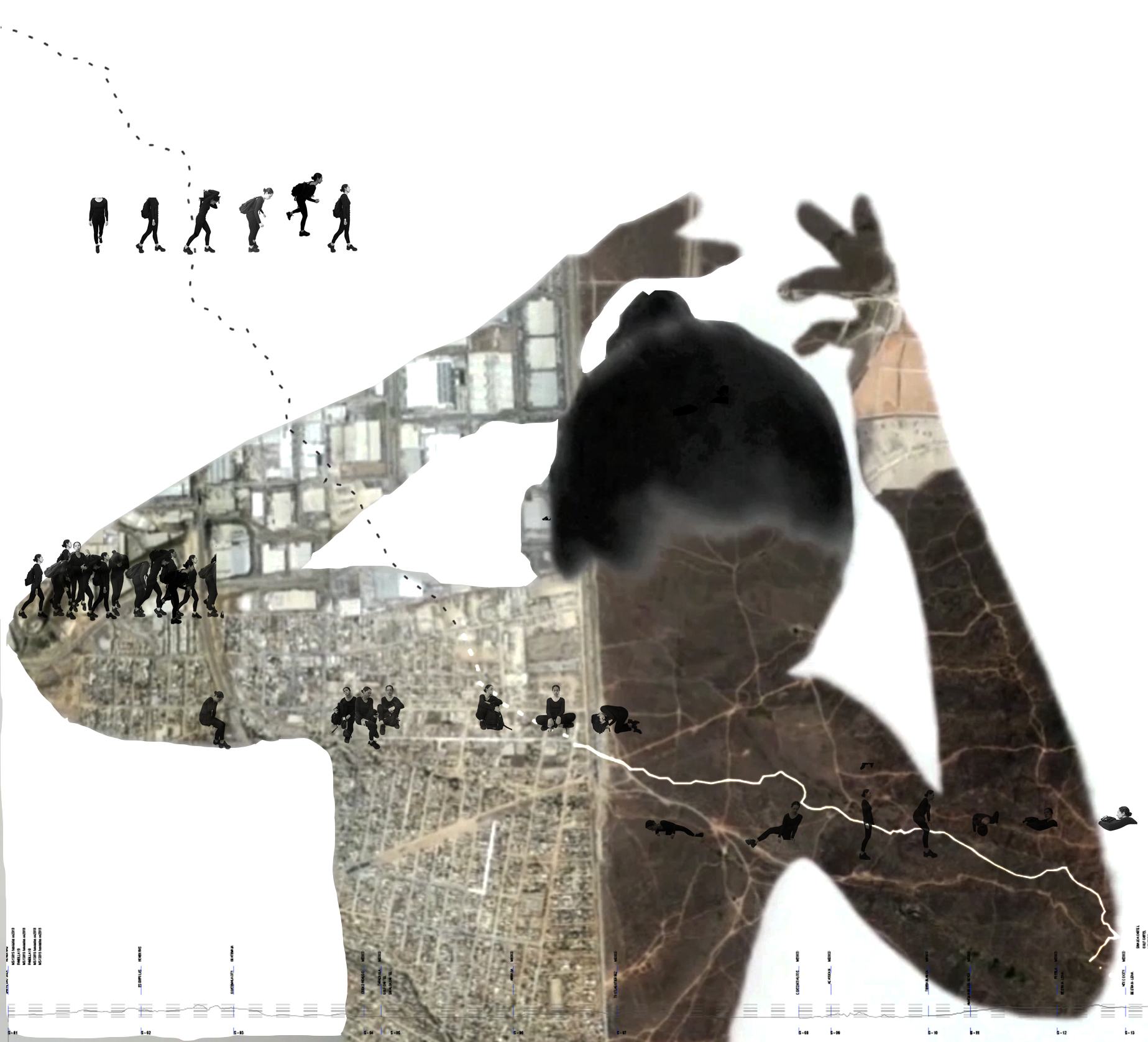
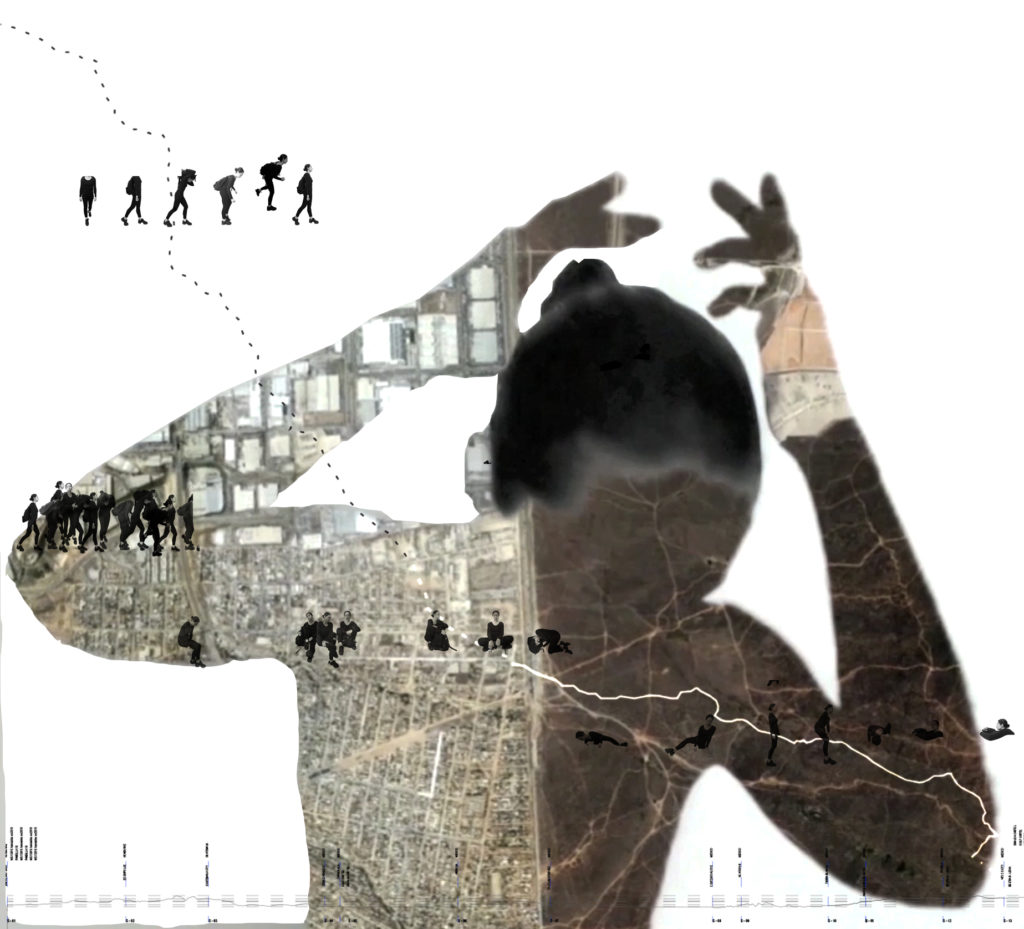
By using existing data on crime, landscape, transport, solidarity networks, technology, testimonies, and photographs, these diagrams replace traditional western maps in order to reveal the true journey of immigrants from one state to another by air, land, and sea. For each case, we chose specific examples of migration in which violence, abuse, and transformation are deeply present. These include air and the land crossings.

For the formal movement by air, permission to cross a border requires individuals to be identified, registered, and documented. The human is recognized from identification documents, as well as face, retina, iris, and fingerprints scanning patterns which are compared within algorithms linked to national, or international, administrative and security databases. Gender, ethnicity, race and/or nationality classifications can lead to different crossing experiences and expose systemic discriminatory practices.
In the informal land crossing, the body intensely engages in multiple actions while facing unpredictable dangers such as crime, violence, or extreme landscape/climate conditions. Multiple and diverse bodies shape the informal migration routes and create networks of mutual aid and support to survive, Together, they consolidate an entity.
To engage with these two types of body conditions, we deploy choreography as a form of Corporal investigation, focusing on its movements and representation. The body is completely reconstructed at the borders and both the formal and informal crossings provoke violation and transformation. This analysis delivers a sequence of movements, a choreography, delineating the traumatic experience of a body subdued to border control. In doing so, it questions how migration impacts identity, body, and personhood.